
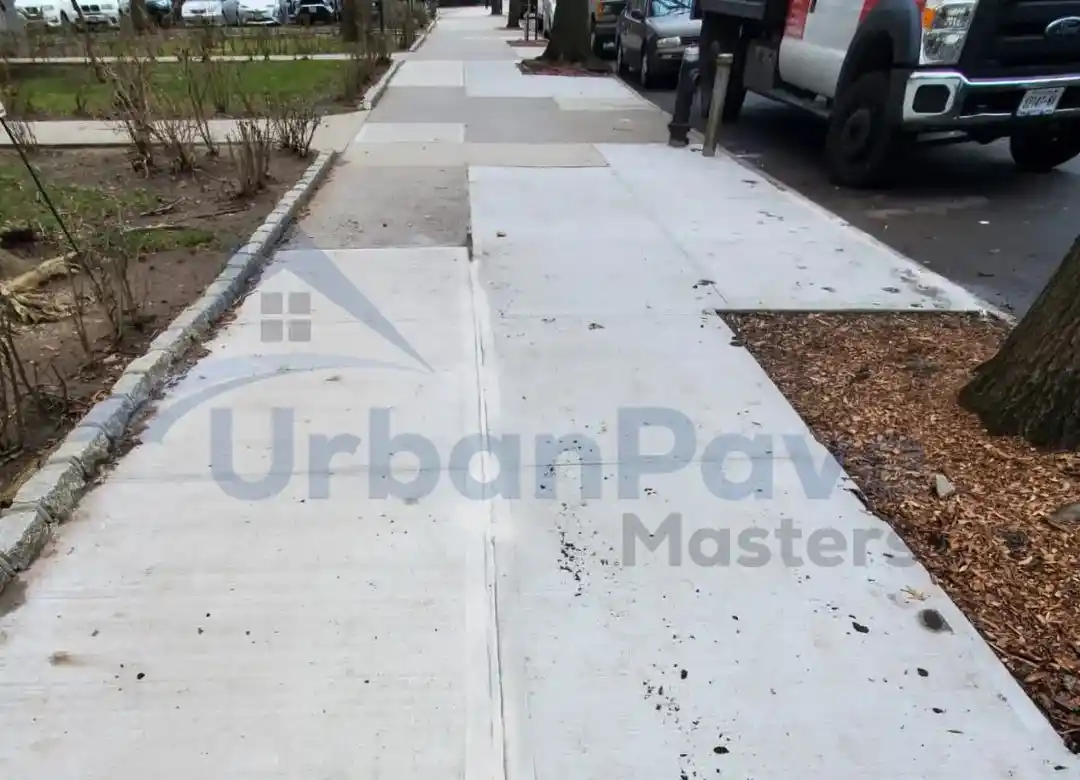
What is Under a Concrete Sidewalk? Why the Base Matters
When you walk down a smooth, strong sidewalk, you probably don’t think about what’s underneath your feet. It just feels solid and safe. But here’s something most people don’t realize: the real strength of a sidewalk doesn’t come from the concrete you see on top. It starts from what’s underneath it.
That hidden layer underneath is what keeps your sidewalk steady for years. If it’s done right, your sidewalk will stay firm and smooth. But if it’s done poorly or skipped altogether, the concrete can crack, sink, or crumble much sooner than expected. Sadly, many sidewalks fail early because builders rush this step or try to save money.
So, let’s take a closer look at what’s under a sidewalk and why that base matters so much for safety and durability.
What Lies Beneath a Concrete Sidewalk
A concrete sidewalk might look like one big, solid piece of cement. But in reality, it’s made of different layers, and each layer plays a special role in keeping it strong and long-lasting. Think of it like a layered cake, except instead of frosting and sponge, you’ve got soil, gravel, and concrete, all working together.
Here’s what you’ll usually find under a concrete sidewalk:
Subgrade (Compacted Soil)
This is the natural soil that sits at the very bottom. Before pouring concrete, contractors remove the top layer of grass, roots, and loose dirt. Then they compact the soil, pressing it down firmly so it’s dense and stable. If this step is skipped or done poorly, the ground can shift, causing your sidewalk to move or sink later.
Aggregate Base (Gravel or Crushed Stone)
This layer is the real foundation, the part that gives your sidewalk its strength. It’s usually made of crushed stone or gravel, and it spreads out the weight of the concrete evenly. It also helps water drain away instead of pooling under the slab. Without it, the concrete sits right on the soil, which can lead to cracks, sinking, and uneven surfaces.
Moisture Barrier (Optional but Helpful)
Some contractors add a thin plastic moisture barrier between the gravel and the concrete. This barrier helps control how much water seeps up from the ground into the slab. It’s not always necessary, but it’s especially useful in places with a lot of rain or poor drainage.
Concrete Slab
Finally, we get to the top layer: the concrete itself. This is the part you walk on every day. But even the best concrete mix can’t last long if the base underneath isn’t built correctly. The visible slab might look perfect at first, but without strong layers beneath it, it won’t stay that way for long.
It’s Not Just Sand and Cement: It’s Engineering
You might think concrete is just poured directly on the ground, but that’s not how it’s supposed to be done. A proper sidewalk requires careful planning and preparation before the concrete is even mixed.
First, the builder removes all the organic material, like grass, roots, and topsoil, because those things break down over time, creating air pockets under the slab. These gaps lead to sinking and cracking.
Next, the soil is compacted to form a solid base. Then comes the aggregate layer, which not only supports weight but also helps water drain properly. In colder places, this layer also helps stop frost heave, when freezing water pushes up the concrete from below.
If a sidewalk is poured directly on soft soil or without a compacted base, it’s like building a house on sand, since it might look fine at first, but it won’t last.
Here’s the proper order for sidewalk installation:
- Excavate to the right depth.
- Remove grass, roots, and topsoil.
- Compact the soil (subgrade).
- Add and compact the gravel or crushed stone base.
- (Optional) Add a moisture barrier.
- Pour the concrete.
Skipping any of these steps, especially compaction, is a recipe for cracks, uneven slabs, and early repairs.
Why the Base Matters More Than You Think
Just like a house needs a strong foundation, a sidewalk depends on a properly built base to stay sturdy. If that base isn’t done right, you might not see problems right away, but cracks, dips, and loose slabs will eventually appear.
Let’s break down why the base is such a big deal.
Drainage Control
Water is one of the biggest enemies of concrete, not because of rain itself, but because of what happens underneath. When water gets trapped under a sidewalk, it starts to wash away the soil and weaken the support. Eventually, the concrete sags, cracks, or even breaks apart.
A base made of compacted gravel or crushed stone solves this problem. It allows water to flow freely and drain away from the slab. This prevents standing water, mold, and long-term damage.
In places like New York City, where snow, ice, and rain are part of life, good drainage isn’t just nice to have, but it’s absolutely necessary.
Even Weight Distribution
You might think sidewalks only handle light foot traffic, but they actually take on more weight than you’d expect, from kids on bikes, delivery carts, wheelchairs, and even snow blowers.
Without a solid base, all that weight presses down unevenly, creating stress points that lead to cracks and uneven slabs.
A well-compacted gravel base spreads that weight evenly, keeping your sidewalk flat and strong. That means fewer tripping hazards and less damage over time.
Stops Settling and Sinking
If the ground below your sidewalk contains roots, mulch, or soft soil, it might seem fine at first, but over time, those materials break down and disappear, leaving empty spaces underneath.
These voids cause the sidewalk to sink or tilt. That’s why professional contractors always remove all organic matter before adding the base layer. A compacted gravel foundation keeps everything in place, preventing settling and keeping the surface level and safe for years.
Protection Against Frost Heave
In cold climates, frost heave is one of the biggest causes of sidewalk damage. When water under the slab freezes, it expands and pushes the concrete upward. When it melts, the slab drops back down, but often not evenly. Over time, this cycle causes cracks and uneven surfaces.
A gravel base helps prevent frost heave by giving freezing water room to expand and drain. It acts like a cushion that protects the sidewalk from the freeze-thaw cycle.
Long-Term Value and Fewer Repairs
Skipping base preparation might save time or money in the short term, but it always costs more later. Sidewalks without a solid foundation wear out faster, need frequent patching, and often have to be replaced within a few years.
On the other hand, a sidewalk built on a well-compacted base can last decades with minimal maintenance. That means fewer cracks, fewer DOT violations, and a cleaner, safer look for your property.
A proper base doesn’t just protect your concrete, but it protects your wallet too.
Conclusion
Next time you walk on a smooth, sturdy sidewalk, remember that it’s not just concrete holding you up, but it’s the strong base beneath it. Every long-lasting sidewalk starts with careful planning, proper layering, and quality materials.
If your sidewalk is cracked, uneven, or sinking, it might not be because of old age; it could be a sign that the groundwork wasn’t done right.
A well-built sidewalk is more than just concrete and cement. It’s an investment in your property’s safety, appearance, and long-term value. Build it right from the ground up, and your sidewalk will stay solid and beautiful for many years to come.